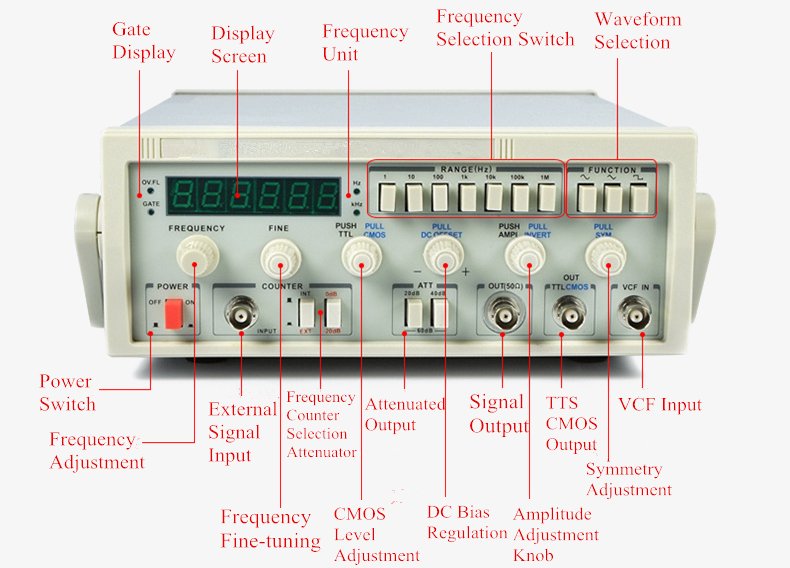
Imagine the invisible infrastructure that powers our modern world: the crisp signal from your smartphone, the life-saving accuracy of an MRI machine, or the precision of a radar system guiding an aircraft. At the heart of developing, testing, and maintaining these critical technologies lies an unsung hero: the signal generator. Its diverse applications are truly the backbone of innovation across industries.
Without these sophisticated devices, engineers would be navigating a world of invisible frequencies blindfolded. They wouldn't be able to create, manipulate, or analyze the electrical signals that form the language of electronics and communication. This guide will pull back the curtain on these indispensable tools, revealing how they empower everything from high-speed data transfer to advanced medical diagnostics.
At a Glance: Your Quick Takeaways
- Signal generators create precise electrical signals (frequency, amplitude, waveform).
- They are essential for designing, testing, and calibrating electronic and communication systems.
- Two main types: Analog (simpler, cost-effective) and Vector (complex, high-precision digital signals for modern wireless).
- Key applications span telecommunications, electronics manufacturing, healthcare, aerospace, and defense.
- Choosing the right generator depends on your specific frequency, modulation, accuracy, and power needs.
The Unseen Architects of Our Connected World
At its core, a signal generator is an electronic device engineered to produce precise electrical signals. Think of it as a master conductor for electrical waves, capable of meticulously controlling attributes like frequency (how many waves per second), amplitude (the signal's strength), and waveform (the shape of the wave). For engineers and technicians in fields ranging from advanced research to routine calibration, these devices are utterly indispensable.
They serve as the benchmark, providing a known, stable signal against which other electronic devices and systems can be measured. From the tiny chip inside your smartphone to the vast network of base stations that keep you connected, virtually every piece of modern electronics that deals with radio frequency (RF) signals owes its reliability and performance to rigorous testing with signal generators.
The Power Behind the Pulse: Key Capabilities
What makes a signal generator so critical? It's not just about creating a signal; it's about creating the right signal—stable, dependable, and precise, tailor-made for specific testing requirements.
Modern RF signal generators are packed with features that enable complex testing and analysis:
- Frequency Sweep: This allows the generator to automatically vary its output frequency across a defined range. It's invaluable for testing how a device, like a filter, responds to different frequencies.
- Modulation: This is the process of embedding information onto a carrier wave. Signal generators offer various modulation capabilities:
- Amplitude Modulation (AM): Varying the signal's strength to carry information.
- Frequency Modulation (FM): Varying the signal's frequency.
- Phase Modulation (PM): Varying the signal's phase (its position within a cycle).
- Complex Modulations: For modern digital communications, generators can create highly intricate schemes like Quadrature Amplitude Modulation (QAM) or Orthogonal Frequency-Division Multiplexing (OFDM). These are crucial for packing more data into a signal.
- Amplitude Control: Beyond just modulation, precise control over the overall output power level is essential for simulating various real-world signal strengths.
These capabilities allow engineers to push the boundaries of technology, ensuring new devices and systems perform flawlessly under a multitude of conditions. If you're looking to dive deeper into the fundamentals, consider Understanding signal generators to truly grasp the foundational concepts behind these powerful devices.
Navigating the Landscape: Types of Signal Generators
Not all signal generators are created equal. Their design and capabilities vary significantly, optimized for different tasks and levels of complexity.
Analog RF Signal Generators: The Dependable Workhorse
Analog RF signal generators are the veterans of the field. They produce continuous waveforms, faithfully imitating natural analog signals using an oscillator circuit.
- How They Work: At their core, these generators typically rely on a Voltage Controlled Oscillator (VCO), where an input control voltage directly determines the output frequency.
- Frequency Range: They usually operate across a broad spectrum, from a few Megahertz (MHz) to several Gigahertz (GHz).
- Advantages:
- Simplicity: Often straightforward to operate with dedicated physical controls.
- Affordability: Generally less expensive than their digital counterparts.
- Reliability & Robustness: Known for their durability and consistent performance.
- Disadvantages:
- Limited Precision & Flexibility: They struggle with highly complex waveforms or advanced digital modulations.
- Lower Frequency Accuracy: Can be prone to minor drift and instability over time.
- Uses: Still highly relevant for testing and calibrating classic communication systems, radio transmitters, and receivers. They're excellent for basic R&D, educational settings, and any application where simplicity, cost-effectiveness, and reliability take precedence over cutting-edge complexity.
Vector RF Signal Generators (Digital): The Modern Maestro
Vector RF signal generators represent the cutting edge, designed specifically to produce the complex modulated signals that define modern wireless communication.
- How They Work: Unlike analog generators, these are fundamentally digital. They construct signals using Digital Signal Processing (DSP), allowing for incredible precision and flexibility.
- Capabilities: They excel at generating intricate modulations like QAM, QPSK, and OFDM – the very building blocks of Wi-Fi, LTE, 5G, and other advanced wireless standards.
- Advantages:
- High Precision & Stability: Produce incredibly accurate and stable signals, essential for verifying the performance of sophisticated communication systems.
- Flexibility: Can generate arbitrary waveforms, noise, and multi-tone signals, simulating a vast array of real-world scenarios.
- Advanced Functions: Often include built-in modulation analysis, allowing engineers to not just create but also assess the quality of complex signals.
- Uses: Indispensable for developing and testing modern RF devices and systems, including those used in advanced wireless communication, radar, and satellite communication. If you're working with 5G, Wi-Fi 6/7, or complex military radar, a vector signal generator is your go-to tool.
Other Key Players in the Signal Generation World
While RF signal generators focus on radio frequencies, other types of generators serve specific purposes, sometimes overlapping with RF applications.
- Function Generators: These are the generalists, producing simple, recurring waveforms like sine, square, triangle, and sawtooth waves. While useful in audio and lower-frequency electronics, their application in high-frequency RF is limited compared to dedicated RF generators.
- Pulse Generators: As their name suggests, these devices specialize in producing square waves with extremely fast rise and fall times. They're critical for testing digital circuits, where the timing and integrity of pulses are paramount. You'll find them essential in semiconductor testing and high-speed digital design.
- Sweep Generators: Closely related to RF generators, sweep generators continuously vary their output frequency across a specified range. They are ideally suited for quickly characterizing the frequency response of components like filters, amplifiers, and antennas, showing how a device behaves across its operational spectrum.
- Arbitrary Waveform Generators (AWG): These are the ultimate custom signal creators. AWGs can generate virtually any user-defined waveform, whether specified by equations, algorithms, or even arbitrary digital data streams. They offer unparalleled flexibility, making them vital for advanced research and development in communications (e.g., simulating complex 5G scenarios), semiconductor testing, and sophisticated radar applications. While powerful, they can have bandwidth limitations compared to dedicated RF generators and are typically more expensive than function generators.
- Video Signal Generators: A niche but important category, these generators produce specific video signals, including horizontal and vertical synchronization, crucial for testing and calibrating older television units and display systems.
The Unseen Engine: Underlying Technologies
Behind the precision and flexibility of modern signal generators are several sophisticated technologies that work in concert:
- Phase-Locked Loop (PLL): Many RF signal generators use PLLs to achieve exceptional frequency accuracy and stability. A PLL locks the output frequency to a highly stable reference frequency, effectively eliminating drift and ensuring that the signal remains incredibly precise over time.
- Direct Digital Synthesis (DDS): This technology generates waveforms digitally by using a clock signal to step through a look-up table of waveform values. DDS offers very fine frequency resolution, fast switching speeds, and excellent phase control, contributing significantly to a generator's accuracy and agility.
- Voltage Controlled Oscillator (VCO): As mentioned with analog generators, the VCO is a fundamental component whose output frequency is directly controlled by an input voltage. It's often part of a PLL system in more advanced designs.
- Modulator Circuits: These are the specialized circuits responsible for applying various modulation schemes (AM, FM, PM, QAM, etc.) to the carrier signal, transforming a simple wave into one carrying complex information.
The Heart of the Matter: Signal Generator Applications Across Industries
Now that we understand what signal generators are and how they work, let's explore where they truly shine: their indispensable applications across a multitude of industries.
Telecommunication Industry: Connecting the World
In the fast-paced world of telecommunications, signal generators are nothing short of essential. Every mobile phone, base station, router, and communication satellite needs rigorous testing.
- Developing New Standards: Engineers use vector signal generators to create complex modulated signals that simulate 5G new radio (NR) waveforms, Wi-Fi 7 standards, or satellite communication protocols. This allows them to design and verify new hardware before deployment.
- Testing Equipment Performance: They verify the sensitivity of receivers, the power output of transmitters, and the quality of signals passing through filters and amplifiers in base stations.
- R&D Labs: Researchers utilize signal generators to study how RF signals behave in different environments, analyze interference patterns, and develop more robust communication techniques.
- Manufacturing: During production, signal generators ensure that every device meets strict industry standards and operates flawlessly.
Electronics Device Manufacturing: Quality from Conception to Consumer
From tiny integrated circuits to large consumer electronics, signal generators are integral to ensuring product quality and compliance.
- Component Testing: Before assembly, individual electronic components like RF transceivers, amplifiers, and mixers are tested with precise signals to verify their performance against specifications.
- Product Verification: Finished products, such as radios, televisions, and cell phones, undergo thorough testing to ensure they function as intended, comply with regulatory standards (e.g., FCC in the US), and deliver a high-quality user experience.
- Troubleshooting & Debugging: When a design isn't working correctly, a signal generator can inject a known signal at various points in a circuit to isolate the problem.
Medicine and Healthcare: Precision for Life-Saving Diagnostics
While perhaps not the first industry that comes to mind, healthcare relies heavily on signal generation for advanced diagnostics and treatment.
- Magnetic Resonance Imaging (MRI): MRI machines are a prime example. They use powerful magnetic fields and radiofrequency signals to generate detailed images of organs and soft tissues within the body. Signal generators provide the precise RF pulses that excite protons in the body, which then emit signals that are detected and translated into images.
- Other Medical Devices: Many other diagnostic and therapeutic devices, from ultrasound to certain types of patient monitoring equipment, require accurate signal generation for their calibration and operation.
Testing and Calibration: Ensuring Peak Performance
The ability to generate signals with known, repeatable characteristics makes these devices indispensable for verifying and calibrating all sorts of electronic equipment.
- Amplifiers and Filters: Signal generators are used to characterize the gain of amplifiers across their frequency range or to plot the precise cutoff frequencies and attenuation characteristics of filters.
- Receivers: They test the sensitivity and selectivity of receivers by feeding them carefully controlled signals, allowing engineers to measure how well the receiver picks up desired signals amidst noise.
- Maintaining Standards: In industries like aerospace and defense, where performance standards are incredibly strict, signal generators are crucial for routine calibration of equipment, ensuring it always operates within tight tolerances. This systematic approach ensures that every piece of gear, from communication radios to navigation systems, performs optimally.
Communication Systems: Designing Robust Networks
Beyond individual devices, signal generators are vital for the design and testing of entire communication systems.
- Network Simulation: Engineers use them to simulate various signal conditions—from pristine signals to those degraded by noise, interference, or fading—to test the robustness of cellular networks, satellite links, and radio systems.
- Modulator/Demodulator Testing: They produce signals to test the performance of the components that encode (modulators) and decode (demodulators) information in a communication link.
- Performance Measurement: Key performance indicators like frequency accuracy, power levels, distortion, and noise floor are measured using controlled signals from generators.
- Interference Testing: By simulating jamming or disruptive signals, engineers can assess how well a communication system can maintain functionality in challenging electromagnetic environments.
Electromagnetic Compatibility (EMC): Living in Harmony
In a world filled with electronic devices, ensuring they don't interfere with each other is crucial. This is where Electromagnetic Compatibility (EMC) testing comes in.
- Interference Simulation: Signal generators are a key component of EMC test systems, generating precise signals to simulate various types of electromagnetic interference (EMI). This allows manufacturers to test how their products will respond to real-world electrical noise and ensure they comply with international EMC standards.
- Immunity Testing: They help verify that a device is immune to external interference, ensuring it won't malfunction when exposed to common electromagnetic fields.
Aerospace and Defense: Guardians of the Skies and Beyond
The demands of aerospace and defense push the boundaries of technology, and signal generators are at the forefront of this innovation.
- Radar Systems: Testing and calibrating advanced radar systems requires highly precise and complex signals to simulate targets, analyze range and velocity detection, and ensure accuracy.
- Electronic Warfare (EW): In EW, signal generators are used to develop and test countermeasures against enemy radar and communication systems. This involves generating complex jamming signals, deceptive signals, and other disruptive waveforms to ensure mission effectiveness and pilot safety.
- Communication & Navigation: They are critical for testing secure communication links and highly accurate navigation systems, ensuring reliability in the most challenging operational environments.
- UAVs and Drones: As unmanned aerial vehicles become more sophisticated, signal generators are used to test their control links, sensor systems, and communication payloads.
Education: Training the Next Generation
In universities and technical schools, signal generators are fundamental teaching tools.
- RF Technology: Students use them to learn the basic principles of RF technology, signal analysis, modulation techniques, and circuit design.
- Hands-on Experience: They provide practical experience in testing electronic components, calibrating equipment, and understanding the real-world behavior of signals, preparing future engineers and technicians for their careers.
Picking Your Powerhouse: How to Choose a Signal Generator
With such a wide array of options and applications, selecting the right signal generator can feel daunting. Here’s a practical guide to help you make an informed decision:
Frequency Range: Cover Your Current (and Future) Needs
- Consider: What is the highest frequency you need to generate? Do you anticipate future projects requiring higher frequencies?
- Guidance: Don't overspend on capabilities you won't use, but also avoid buying a generator that quickly becomes obsolete. A good rule of thumb is to select one that covers your target frequency plus a buffer for future expansion.
Output Power: Strength in Numbers
- Consider: What power levels do your devices under test require? Do you need to compensate for cable losses or external attenuators?
- Guidance: Ensure the generator can provide sufficient output power for your application. Some tests require very low power (e.g., receiver sensitivity), while others might need higher levels (e.g., driving an antenna).
Modulation Schemes & Signal Selection: The Language of Your Device
- Consider: Are you working with simple analog signals (AM/FM/PM) or complex digital modulations (QAM, QPSK, OFDM for LTE/5G/Wi-Fi)? Do you need arbitrary waveform capabilities?
- Guidance: For modern wireless communications, a vector signal generator with extensive modulation options is essential. For basic RF testing or older systems, an analog generator might suffice. Arbitrary waveform capabilities offer maximum flexibility for custom signals.
Signal Accuracy and Stability: Precision is Paramount
- Consider: How critical is frequency accuracy, phase noise, and spectral purity for your application?
- Guidance: For high-precision applications like radar or satellite communications, prioritize models with exceptional accuracy, stability (low drift), and low phase noise. Less demanding applications might tolerate slightly lower specifications. Always check the specifications for parameters like frequency error and phase noise.
Form Factor: Where Will You Work?
- Consider: Will you be using the generator in a lab environment (benchtop), in the field (portable), or as part of an automated test system (modular)?
- Guidance: Benchtop instruments offer robust features and displays for lab use. Smaller form factor units (like USB-controlled or handheld) are great for field work or space-constrained setups. Modular options (like PXI-based) integrate well into automated test racks.
Cost: Balancing Budget and Capability
- Consider: What is your budget? What is the return on investment for higher-end features?
- Guidance: Signal generators range widely in price. Define your essential requirements first, then explore options that meet those while staying within your budget. Sometimes, investing in a more capable unit can save time and frustration in the long run.
Common Questions and Misconceptions
What's the difference between an RF signal generator and a function generator?
While both generate signals, an RF signal generator is specialized for high-frequency radio applications (MHz to GHz range), offering precise control over modulation, power, and spectral purity critical for wireless communications. A function generator typically operates at lower frequencies (Hz to tens of MHz), generating simpler waveforms like sine, square, and triangle waves, primarily used in audio and general electronics testing.
Can a signal generator simulate real-world noise?
Yes, many advanced signal generators, particularly vector signal generators and Arbitrary Waveform Generators (AWGs), can generate various types of noise (e.g., white noise, Gaussian noise) and superimpose them onto a desired signal. This is crucial for testing the robustness and immunity of receivers and communication systems against interference.
Are analog signal generators still relevant?
Absolutely. While digital vector generators dominate modern wireless R&D, analog signal generators remain highly relevant for basic RF testing, educational purposes, calibration of older equipment, and applications where simplicity, reliability, and cost-effectiveness are paramount. Their continuous, pure waveforms are ideal for certain types of component characterization.
What's the role of DDS and PLL in modern signal generators?
Direct Digital Synthesis (DDS) provides highly accurate frequency resolution, fast switching, and excellent phase control by digitally creating waveforms. Phase-Locked Loops (PLLs) ensure the stability and accuracy of the output frequency by locking it to a high-precision reference clock, minimizing drift and phase noise. Together, they are fundamental to achieving the precise, stable, and agile signals required by today's complex applications.
Beyond the Benchtop: The Future of Signal Generation
The landscape of signal generation continues to evolve at a rapid pace. As we push towards even higher frequencies for 6G, terahertz communication, and advanced radar, signal generators are adapting with wider bandwidths, even greater spectral purity, and more complex modulation capabilities.
The integration of artificial intelligence and machine learning is also on the horizon, potentially allowing signal generators to learn and adapt to test scenarios, automate complex procedures, and even predict potential issues. With the rise of software-defined radio (SDR) and increasing demand for customizable test environments, the flexibility and programmability of signal generators will only become more critical.
Your Next Signal: Empowering Your Projects
From the cutting edge of aerospace defense to the everyday convenience of your smartphone, signal generators are the silent workhorses that make it all possible. They are not just tools; they are enablers of innovation, ensuring that the devices and systems that define our connected world are reliable, efficient, and robust.
Whether you're an engineer developing the next generation of wireless technology, a technician calibrating medical equipment, or a student learning the fundamentals of RF, understanding and skillfully utilizing signal generators is a powerful asset. By carefully considering your specific needs—frequency range, modulation complexity, accuracy requirements, and budget—you can choose the right signal generator to empower your projects and drive future advancements. The invisible language of signals is being spoken louder and clearer than ever, thanks to these vital instruments.