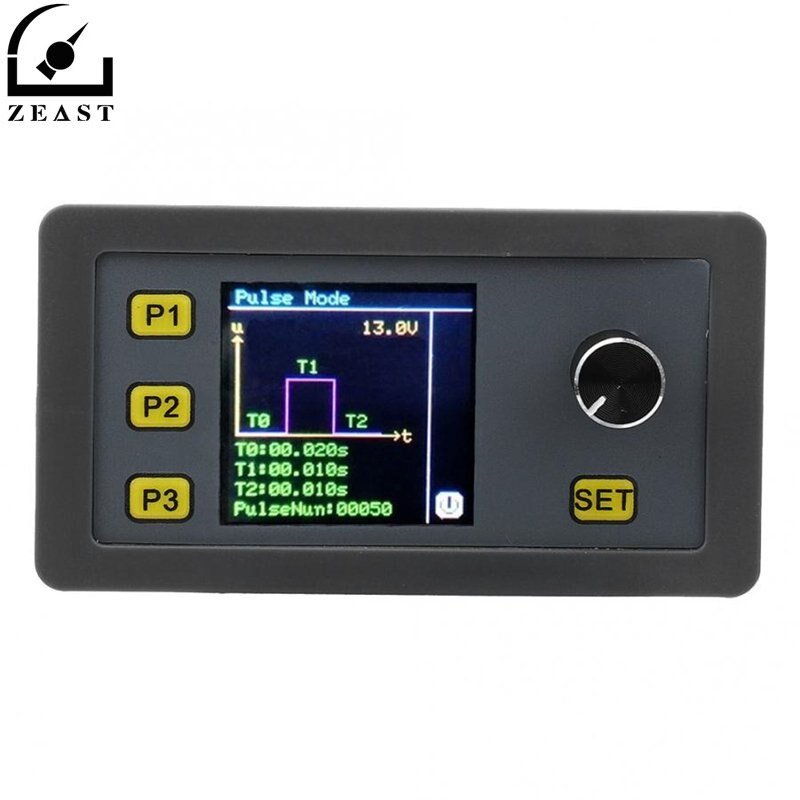
In the vast, intricate world of electronics, every device, from the simplest circuit to the most complex communication system, relies on signals. These are the invisible pulses, waves, and patterns that carry information, trigger actions, and bring technology to life. But how do engineers and developers precisely create and control these fundamental building blocks for testing, design, and validation? The answer lies with the signal generator – a truly indispensable tool in the electronic engineer's arsenal.
A signal generator is much more than just a piece of test equipment; it's a sophisticated instrument designed to produce electrical signals with exact, user-defined properties. Imagine needing to simulate a specific radio broadcast, test the response of an audio amplifier, or validate the timing of a digital chip. A signal generator provides the controlled electrical stimulus needed for these tasks, offering precise control over amplitude, frequency, and wave shape. It's the silent orchestrator behind countless electronic innovations, dating back to the General Radio 403 in 1928.
This hub will guide you through the multifaceted world of signal generator signals, from their fundamental creation to their diverse applications across modern technology.
The Core Mechanics: How Signals Come to Life
At its heart, a signal generator’s purpose is to create a predictable electrical output. This isn't magic; it's a careful blend of physics and engineering. Whether it’s a simple oscillator humming at a fixed frequency or a complex digital system crafting an intricate waveform, the underlying goal remains consistent: to produce a stable, accurate signal. These devices leverage various electronic components and computational techniques, such as digital-to-analog converters (DACs) and digital signal processing, to bring these signals into existence.
Understanding the internal workings and foundational concepts behind signal creation is crucial for selecting and utilizing the right instrument for your needs. For a deeper dive into how these remarkable devices convert electrical energy into precise, usable signals, explore our detailed guide on the Principles of Signal Generation.
Crafting the Message: Waveforms and Modulation
The "signal" in signal generator isn't a singular entity; it encompasses an enormous variety of electrical patterns. These patterns, known as waveforms, are the specific shapes and characteristics of the electrical energy being produced. You might need a clean, continuous sine wave to test audio fidelity, a sharp square wave for digital clocking, or a ramp-like sawtooth wave for sweep circuits. The ability to generate these fundamental waveforms, and indeed, many others, is a core strength of these instruments.
Beyond basic shapes, modern electronics often require signals that carry information through modulation. This process involves altering one or more properties of a carrier wave (like its amplitude, frequency, or phase) in response to a modulating signal. This is how radio signals carry audio, and how digital data is transmitted over various communication channels. Mastering the art of creating and manipulating these complex signals is vital for advanced design and testing. Delve into the specifics of signal construction and manipulation in our comprehensive article on Waveform Generation & Modulation.
A Toolkit for Every Task: Exploring Signal Generator Types
Given the vast array of electronic systems and the diverse nature of signals they handle, it's no surprise that signal generators come in many specialized forms. No single device can cater to every application, leading to a rich ecosystem of instruments tailored for specific frequency ranges, waveform complexities, and modulation capabilities. From basic function generators creating simple repetitive waves to highly sophisticated arbitrary waveform generators capable of custom, complex patterns, the choice depends entirely on your project's demands.
Consider the needs of testing cellular communication, where RF and microwave signal generators are paramount, or perhaps the meticulous requirements for validating digital integrated circuits using digital pattern generators. Each type brings unique strengths and features to the table. To navigate this diverse landscape and identify the ideal instrument for your specific testing and development challenges, discover more about Signal Generator Types & Classifications.
Defining Excellence: Understanding Signal Generator Specifications
Not all signal generators are created equal, and their performance is quantified by a set of critical specifications. These parameters dictate a generator's accuracy, stability, purity, and versatility, directly impacting its suitability for various applications. Key specifications include frequency range and resolution, output power levels (often expressed in dBm), phase noise, spectral purity (harmonics and spurious emissions), and modulation bandwidth. An RF generator, for instance, might prioritize low phase noise for clear communication signals, while an audio generator emphasizes ultra-low distortion.
Understanding these technical details is paramount for making an informed purchasing decision and for accurately interpreting test results. A robust attenuator, offering output power variation typically from -135 to +30 dBm, is crucial for simulating different signal strengths in real-world scenarios, for example. To thoroughly grasp the nuances that differentiate a good signal generator from a great one, refer to our guide on Signal Generator Specifications.
Powering Innovation: Discovering Signal Generator Applications
The utility of a signal generator extends across virtually every facet of electronics. These devices are the silent workhorses behind the scenes, enabling countless technologies we rely on daily. They are indispensable for testing receiver sensitivity in radio systems, analyzing the frequency response of audio equipment, validating the functionality of digital logic circuits, and even creating complex waveforms for radar and electronic warfare systems. From fundamental research to rapid prototyping and production line testing, signal generators are critical.
Think about the development of cellular phones, Wi-Fi routers, GPS devices, or even cutting-edge medical equipment – each requires precise signal generation at various stages of its lifecycle. They even find applications in less conventional areas, such as synthesizing audio signals for music production or generating specific video patterns for display calibration. To fully appreciate the expansive role these instruments play in bringing modern technology to fruition, explore the wide array of uses in Discover Signal Generator Applications.
The Unseen Architect of Electronics
Signal generator signals are the heartbeat of electronic development, the invisible language that engineers use to communicate with, test, and refine the devices that shape our world. From the simple sine wave to the complex digitally modulated carrier, the ability to precisely create and control these electrical stimuli is foundational to innovation. As electronics continue to evolve, becoming faster, smaller, and more integrated, the sophistication and importance of signal generators will only grow, remaining at the forefront of technological advancement.