In the intricate world of electronics, a precise, reliable signal can be the difference between a groundbreaking innovation and a frustrating dead end. This is where signal generators come in: they're the silent workhorses that inject controlled electronic signals into circuits, allowing engineers to test, validate, and troubleshoot designs with exacting precision. But like a mechanic's toolbox, not all signal generators are created equal. Understanding the nuances of Signal Generator Types & Classifications is crucial for selecting the right tool for the job.
Imagine trying to diagnose an engine problem without a functioning spark plug – it’s a non-starter. Similarly, testing complex electronic circuits, from simple audio amplifiers to sophisticated wireless communication systems, demands a device that can mimic real-world electrical conditions or create ideal test signals. This guide will walk you through the essential categories, helping you demystify their capabilities and make informed decisions.
At a Glance: Your Quick Guide to Signal Generators
- What they do: Create various electrical signals (analog or digital) to test electronic circuits and systems.
- Core Categories: From basic function generators to highly specialized RF vector signal generators, each type serves distinct purposes.
- Key Differentiators: Waveform complexity, frequency range, modulation capabilities, output power, and signal purity are critical factors.
- Choosing Wisely: The "best" generator isn't about raw power but about perfectly matching the instrument's features to your specific testing requirements.
The Heartbeat of Electronics Testing: Why Signal Generators Matter
Every electronic device, from your smartphone to a satellite, relies on signals. These signals carry information, synchronize operations, and drive components. To ensure a new circuit design performs as expected, engineers need a way to introduce known, controlled signals and observe the circuit's response. This controlled injection of energy is the fundamental role of a signal generator. Without them, verifying a design, characterizing components, or tracking down elusive bugs would be a guessing game.
The sheer diversity of electronic applications means a "one-size-fits-all" signal generator simply doesn't exist. Instead, manufacturers have developed specialized instruments, each optimized for particular types of waveforms, frequency ranges, or modulation schemes. Let's delve into these critical distinctions.
Decoding the Core: Function Generators and Their Foundational Role
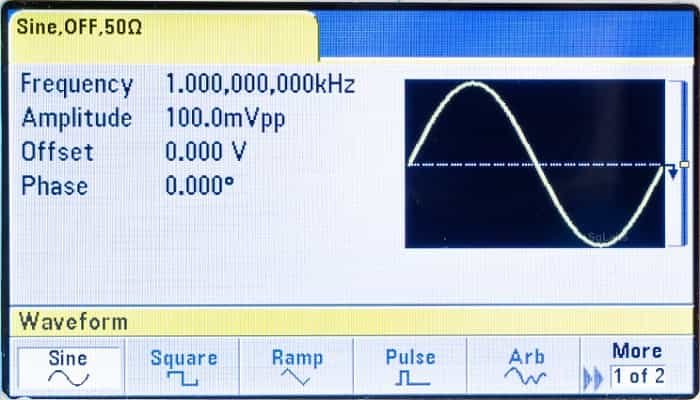
When you need to produce fundamental electrical waveforms over a broad range of frequencies, a function generator is often your go-to device. These instruments are the bedrock of many test benches, producing common, repeatable signals that are essential for basic circuit analysis and verification.
What They Are: Function generators typically output a standard set of waveforms, including:
- Sine waves: The purest form of AC signal, fundamental in audio, RF, and power applications.
- Square waves: Ideal for digital logic testing, clock signals, and pulse response analysis.
- Ramp or triangular waves: Useful for sweep generators, control systems, and testing linear responses.
- Pulse waves: Crucial for timing circuits, digital signals, and power electronics.
- Sometimes, they might also offer more specialized patterns like cardiac or Gaussian pulse waves.
The term "function" in their name specifically refers to this limitation to a preset list of common waveforms. They are straightforward, relatively easy to operate, and invaluable for general-purpose testing where extreme customization isn't a primary concern.
Key Applications: - Bench testing audio circuits.
- Driving logic gates.
- Testing filters and amplifiers.
- Educational laboratories.
While fundamental, the simplicity of a function generator means it might hit its limits when your tests demand more complex or dynamic signal characteristics.
Stepping Up: The Versatility of Arbitrary Function Generators (AFGs)
Imagine your basic function generator, but with a significant upgrade: the ability to generate signals that aren't just pre-defined. This is where the Arbitrary Function Generator (AFG) shines. An AFG builds upon the foundation of a function generator by offering both a preset list of waveforms and the capability to create "arbitrary" waveforms – signals you define yourself.
Defining Features:
- Preset + Arbitrary: Like their function generator cousins, AFGs come with common waveforms built-in. But crucially, they allow operators to define and generate unique waveforms that aren't part of the standard library.
- Parameter Control: You're not just selecting a waveform; you can finely tune its parameters. This includes adjusting how fast it's played, its amplitude, offset, and even adding basic distortion or modulation. This flexibility makes them incredibly powerful for simulating specific real-world conditions.
- Stability and Speed: A hallmark of AFGs, as highlighted by Tektronix, is their excellent stability and rapid response to frequency changes. This makes them ideal for tests requiring quick shifts between different signal states.
- Prevailing Architecture: Today, the AFG represents the most prevalent signal generator architecture in the industry, balancing versatility with performance.
Practical Use Cases: - Double Pulse Test: A standard companion in power electronics for characterizing switching devices like IGBTs and MOSFETs.
- Frequency Hopping Simulation: Quickly switching between two frequencies to test agile radio systems.
- Sensor Emulation: Replicating the output of various sensors to test control systems without the physical sensor.
AFGs typically produce fewer waveform variations than their more sophisticated siblings, the Arbitrary Waveform Generators (AWGs), but their blend of stability, speed, and arbitrary capability makes them indispensable. For those looking to delve deeper into the fundamental building blocks of these devices, you can always learn about signal generator signals and how they are synthesized.
Unleashing Limitless Possibilities: Arbitrary Waveform Generators (AWGs)
When your testing demands signals that defy conventional descriptions—waveforms that are truly unique, dynamic, and complex—you turn to the Arbitrary Waveform Generator (AWG). This is where signal generation enters the realm of almost limitless possibilities.
Beyond AFGs: While an AFG can generate some arbitrary waveforms, an AWG is a more complex instrument designed to produce almost any waveform you can imagine. It offers a degree of versatility that few other instruments can match, making it the tool of choice for cutting-edge research and demanding simulations.
Mechanism & Power of Customization:
- Sophisticated Playback System: Fundamentally, an AWG acts like an incredibly advanced digital-to-analog converter (DAC) and playback system. It delivers waveforms based on stored digital data that precisely describes the constantly changing voltage levels of an AC signal. You essentially "draw" your waveform digitally, and the AWG brings it to life.
- Sequencing Capabilities: For greater flexibility, AWGs allow you to load many different waveforms as "steps." These steps can then be played out in a sequence involving repeats, jumps, and triggers, defining the order and number of times each step is repeated. This "playlist" functionality means you can create extremely complex and dynamic waveform playback scenarios that evolve over time.
- Custom Compiled Waveforms: Unlike AFGs that might rely on a mix of presets and simple arbitrary forms, AWGs are all about generating custom-compiled waveforms tailored exactly to your specifications.
High-End Applications: - Optical Modulation: Creating the precise light signals needed for high-speed fiber optic communication.
- Quantum Computing Research: Generating the delicate and complex control signals required to manipulate qubits.
- Automotive Anti-lock Brake System (ABS) Simulation: Mimicking the erratic sensor signals from a skidding wheel to test ABS controllers.
- Wireless Network Stress Testing: Generating highly distorted or complex modulated signals to push wireless receivers to their limits.
An AWG is a significant investment, but for applications requiring unparalleled flexibility and the ability to simulate highly specific or evolving real-world signal conditions, it is an indispensable tool.
The Wireless World's Workhorse: RF Signal Generators
Moving beyond the general-purpose generation of electrical signals, we enter the specialized domain of RF (Radio Frequency) Signal Generators. As their name suggests, these instruments are primarily designed for creating signals in the radio frequency spectrum, which is critical for wireless communication, radar, and broadcasting applications.
Specialization for Wireless Tests: If your focus is on wireless devices – testing transceivers, receivers, antennas, or RF components – an RF signal generator is typically the instrument of choice. They are engineered to produce high-frequency signals with exceptional purity and precise control over parameters relevant to wireless communication.
Key Performance Indicators (KPIs): Unlike function or arbitrary generators where voltage range and DAC capabilities are paramount, RF signal generators are judged by different metrics:
- Frequency Range: How high (and sometimes how low) in the RF spectrum they can generate signals. This can extend from kilohertz into multiple gigahertz.
- Frequency Setting Resolution: The precision with which you can set the output frequency.
- Maximum Output Power: How strong of a signal they can deliver, crucial for driving antennas or testing power amplifiers.
- Phase Noise: A measure of the signal's purity and stability in the frequency domain. Low phase noise is critical for sensitive RF measurements and communication systems.
Modulation Capabilities: Most standard RF signal generators provide common analog modulation schemes: - Amplitude Modulation (AM): Varying the amplitude of a carrier wave to encode information (e.g., AM radio).
- Frequency Modulation (FM): Varying the frequency of a carrier wave (e.g., FM radio).
- Phase Modulation (PM): Varying the phase of a carrier wave.
RF signal generators are essential for verifying the performance of wireless devices, ensuring they can transmit and receive signals cleanly and efficiently across various frequencies and conditions.
Precision in Wireless: RF Vector Signal Generators
Building on the capabilities of standard RF signal generators, the RF Vector Signal Generator takes wireless testing to an even higher level of sophistication. These instruments are specifically designed to create complex RF signals that incorporate both analog and, critically, digital modulation schemes.
Advanced Modulation: Modern wireless communication, from Wi-Fi to 5G, relies heavily on digital modulation techniques to pack more data into a given bandwidth. A vector signal generator is adept at creating these signals, which often involve manipulating both the amplitude and phase (the "vector" components) of the RF carrier wave simultaneously.
Common Digital Modulation Formats:
- Quadrature Amplitude Modulation (QAM): Encodes data by varying both the amplitude and phase of the carrier.
- Frequency Shift Keying (FSK): Encodes data by shifting the carrier frequency between discrete values.
- Phase Shift Keying (PSK): Encodes data by shifting the phase of the carrier.
- And many other complex formats like OFDM (Orthogonal Frequency-Division Multiplexing) used in Wi-Fi and LTE.
Why Vector? The term "vector" refers to the generator's ability to precisely control the in-phase (I) and quadrature (Q) components of the RF signal. By independently manipulating I and Q, it can generate highly complex constellations of modulated signals, accurately replicating real-world wireless transmissions.
Applications: - Testing 5G/4G Communication Devices: Validating transceivers and components for compliance with cellular standards.
- Wi-Fi and Bluetooth Device Testing: Characterizing wireless modules under various signal conditions.
- Radar System Development: Simulating complex radar pulses and environmental conditions.
- Satellite Communication: Emulating sophisticated modulation schemes used in satellite links.
For any application involving modern digital wireless communication, an RF vector signal generator is an indispensable tool, providing the necessary precision and complexity to ensure robust and reliable performance. Tektronix, for instance, offers a wide range of industry-leading signal generators that span these applications, from replicating simple sensor signals to creating the fastest high-speed serial data signals and complex RF waveforms. Each is designed to create a virtually unlimited number of signals—analog or digital, ideal or distorted, standard or custom—to meet diverse engineering needs.
Choosing Your Signal Generator: A Practical Guide
Navigating the diverse landscape of signal generators can feel daunting, but a structured approach based on your specific needs will simplify the decision. Here’s a practical guide to help you choose the right instrument:
1. Define Your Application:
- What are you testing? Is it an audio amplifier, a digital logic circuit, an RF module, or a high-speed data link?
- What kind of signals does your device under test (DUT) expect or produce? This is the most crucial starting point.
2. Determine Required Waveform Complexity: - Basic Sine/Square/Ramp? A standard Function Generator might suffice. These are cost-effective and straightforward.
- Standard waveforms PLUS some customizability? An Arbitrary Function Generator (AFG) provides a powerful blend of presets and user-defined signals, ideal for many general-purpose and power electronics tests.
- Any waveform imaginable, highly complex sequences, or specific real-world simulations? An Arbitrary Waveform Generator (AWG) is your choice for cutting-edge research and highly specialized applications like quantum computing or radar simulation.
3. Consider the Frequency Range: - Audio (Hz to kHz)? Most function and AFGs cover this.
- Intermediate Frequencies (kHz to MHz)? Function generators, AFGs, and some RF generators cover this.
- Radio Frequencies (MHz to GHz)? You'll need an RF Signal Generator or RF Vector Signal Generator, depending on modulation needs.
- Microwave Frequencies (multi-GHz)? High-end RF and vector signal generators are essential.
4. Evaluate Modulation Needs: - No modulation or simple analog (AM/FM/PM)? A basic RF Signal Generator will handle this.
- Complex digital modulation (QAM, FSK, PSK) for modern wireless standards? An RF Vector Signal Generator is absolutely necessary.
5. Assess Output Power and Signal Purity: - Is driving an antenna important? Look at maximum output power for RF generators.
- Are sensitive measurements affected by noise? Pay close attention to phase noise specifications, especially for RF signals.
- Does signal fidelity matter? Check harmonic distortion specs.
6. Budget & Future-Proofing: - Cost: Function generators are generally the most affordable, followed by AFGs, then RF generators, with AWGs and RF Vector Signal Generators being the most significant investments.
- Scalability: Consider if your future projects might require more advanced capabilities. Investing slightly more now can save you from needing to purchase another instrument later.
A Simple Decision Flow:
- Do you need to test wireless/RF systems?
- Yes: Go to step 2.
- No: Go to step 3.
- For RF, do you need complex digital modulation (e.g., for Wi-Fi, 5G)?
- Yes: RF Vector Signal Generator.
- No (only analog AM/FM/PM): RF Signal Generator.
- For non-RF, do you need to generate any imaginable custom waveform with complex sequencing?
- Yes: Arbitrary Waveform Generator (AWG).
- No: Go to step 4.
- Do you need standard waveforms PLUS the ability to define some basic arbitrary waveforms with parameter control (amplitude, offset, simple modulation)?
- Yes: Arbitrary Function Generator (AFG).
- No (only basic sine/square/ramp/pulse): Function Generator.
By systematically evaluating these criteria, you can confidently select the signal generator that aligns perfectly with your engineering challenges.
Beyond the Basics: Exploring Key Specifications & Features
While the type of signal generator provides a broad classification, a deeper dive into specific features will refine your choice and ensure optimal performance for your application. When comparing models within a category, here's what to scrutinize:
- Frequency Range: This specifies the minimum and maximum frequencies the instrument can generate. Crucial for matching the operating range of your DUT.
- Amplitude Range and Resolution: How strong the signal can be, and how finely you can adjust its voltage (e.g., peak-to-peak, RMS). A wide, precise range is vital for characterization.
- Frequency Resolution: The smallest increment by which you can change the frequency. Higher resolution means more precise tuning.
- Waveform Memory (for AFGs/AWGs): This dictates the length and complexity of arbitrary waveforms you can store and generate. Deeper memory allows for longer, more detailed custom signals.
- Sample Rate (for AFGs/AWGs): The speed at which the digital-to-analog converter updates the output voltage. A higher sample rate enables the generation of higher frequency arbitrary waveforms with better fidelity.
- Harmonic Distortion: A measure of unwanted integer multiples of the fundamental frequency present in the output signal. Lower harmonic distortion indicates a cleaner, purer signal, which is critical for sensitive measurements.
- Phase Noise (especially RF): This quantifies the short-term fluctuations in the phase of the signal. In RF, low phase noise is paramount for testing communication links, where phase accuracy is critical for signal integrity.
- Modulation Types: Beyond the primary classification, look at the specific types of analog (AM, FM, PM) and digital (ASK, FSK, PSK, QAM, OFDM) modulation supported.
- Channel Count: Some generators offer multiple independent output channels, allowing you to generate synchronized or differential signals simultaneously.
- Triggering and Gating: The ability to start, stop, or synchronize waveform generation based on external or internal triggers, essential for pulsed measurements and coordinated testing.
- Connectivity: USB, Ethernet, GPIB interfaces for remote control and integration into automated test systems.
- Software Capabilities: User-friendly interfaces, waveform creation tools, and programming libraries can significantly enhance usability.
Understanding these specifications will empower you to compare datasheets effectively and select a signal generator that not only fits its general classification but also excels in the specific performance metrics critical to your work.
Common Misconceptions & Clarifications
Even seasoned engineers sometimes harbor misunderstandings about signal generators. Let's clear up a few common points:
- "All signal generators are pretty much the same." This is perhaps the biggest misconception. As we've seen, the range of capabilities is vast. A basic function generator cannot perform complex digital modulation for 5G testing, nor can an RF generator create highly customized baseband waveforms with intricate sequencing. Matching the tool to the task is paramount.
- "A function generator can just do everything an AFG can if I try hard enough." While there's overlap in basic waveform generation, the "arbitrary" capability of an AFG, particularly its ability to modify parameters and handle simple user-defined signals, sets it apart. An AFG is an evolution, not just a fancier function generator.
- "AWGs are only for theoretical research or highly specialized labs." While AWGs are indeed used in cutting-edge research, their applications have broadened considerably. Industries like automotive (ABS simulation), aerospace, and even advanced manufacturing now leverage AWGs to simulate complex real-world conditions that cannot be replicated with simpler instruments. They bridge the gap between theoretical models and practical testing.
- "Higher frequency is always better." Not necessarily. If you're designing audio circuits, a 60 GHz RF generator offers no advantage over a good quality AFG and comes with a significantly higher price tag. The "right" frequency range is the one that covers your application with sufficient headroom, not necessarily the highest possible.
The Future of Signal Generation: What's Next?
The evolution of signal generators mirrors the rapid advancements in electronics itself. We can anticipate continued trends towards:
- Higher Frequencies and Bandwidths: As wireless communication pushes into millimeter-wave and terahertz bands, and high-speed serial data rates increase, signal generators will need to keep pace.
- Increased Complexity and Realism: More sophisticated modeling of real-world phenomena, including channel impairments, noise, and interference, will be integrated directly into generators.
- Software-Defined Instrumentation (SDI): Greater flexibility through software control, allowing instruments to be reconfigured for different test scenarios without hardware changes.
- Integration and Multi-Functionality: Combining signal generation with other test equipment functions (e.g., oscilloscopes, spectrum analyzers) into single, highly integrated platforms.
- Artificial Intelligence and Machine Learning: Potentially using AI to optimize test sequences, generate adaptive signals, or even predict failure modes based on signal responses.
These advancements promise even more powerful and versatile tools, enabling engineers to tackle increasingly complex design and test challenges in the coming years.
Your Next Step: Matching the Tool to the Task
Understanding the diverse world of signal generator types and classifications is more than just academic knowledge; it’s a critical skill for any professional working with electronics. From the humble function generator providing foundational waveforms to the cutting-edge RF vector signal generator orchestrating complex digital modulation, each instrument serves a unique and vital purpose.
Your actionable takeaway is clear: always match the signal generator to the specific requirements of your test scenario. Resist the temptation to over-specify or under-equip. Carefully assess the waveform complexity, frequency range, modulation needs, and signal purity demands of your application. Consult manufacturer specifications, leverage available resources, and don't hesitate to seek expert advice when faced with complex decisions. By doing so, you'll ensure your test bench is equipped with the right tools to drive innovation and guarantee the reliability of your electronic designs.